Combined+
Efficient evaporation. Reliable superheating.
The new Vahterus Combined+ combines the advantages of a flooded evaporator with integrated droplet separation and suction gas superheating.
This innovative solution, introduced at Chillventa 2026, has been developed for industrial refrigeration and heat pump systems where both high heat transfer efficiency and reliable compressor operating conditions are essential.
Combined+ is particularly interesting for systems using natural refrigerants such as ammonia (NH₃), carbon dioxide (CO₂) and hydrocarbons.
Why is superheating so important?
A flooded evaporator offers significant thermodynamic advantages. Since the entire heat transfer surface is utilised for refrigerant evaporation, a small temperature approach can be achieved.
However, the refrigerant vapour leaving the evaporator is typically close to saturation conditions. Although a properly designed droplet separator prevents liquid droplets from being carried over, it does not provide any additional superheating. Under certain operating conditions, this can become a concern. Examples include varying loads, system start-up or heat loss in the suction line of heat pump systems, which may cause saturated vapour to condense again.
If liquid refrigerant reaches the compressor, it can cause mechanical damage, lubrication problems and unwanted operational disturbances.Particularly in industrial heat pumps, it is therefore important that the suction gas conditions comply with the compressor manufacturer's requirements.
The solution: Vahterus Combined+
The Combined+ builds on the well-established Vahterus Combined evaporator, originally developed jointly by Vahterus and Wijbenga. While the existing Combined integrates a flooded evaporator and droplet separator into a single unit, the Combined+ adds a dedicated superheater.
The result is a compact heat exchanger combining three functions:
- Flooded evaporator: efficient refrigerant evaporation with excellent heat transfer performance.
- Droplet separation: separation of liquid refrigerant from the vapour stream.
- Suction gas superheating: additional heating of the refrigerant vapour before it enters the compressor.
This allows the evaporator to maintain its high thermal efficiency while providing additional conditioning of the suction gas.
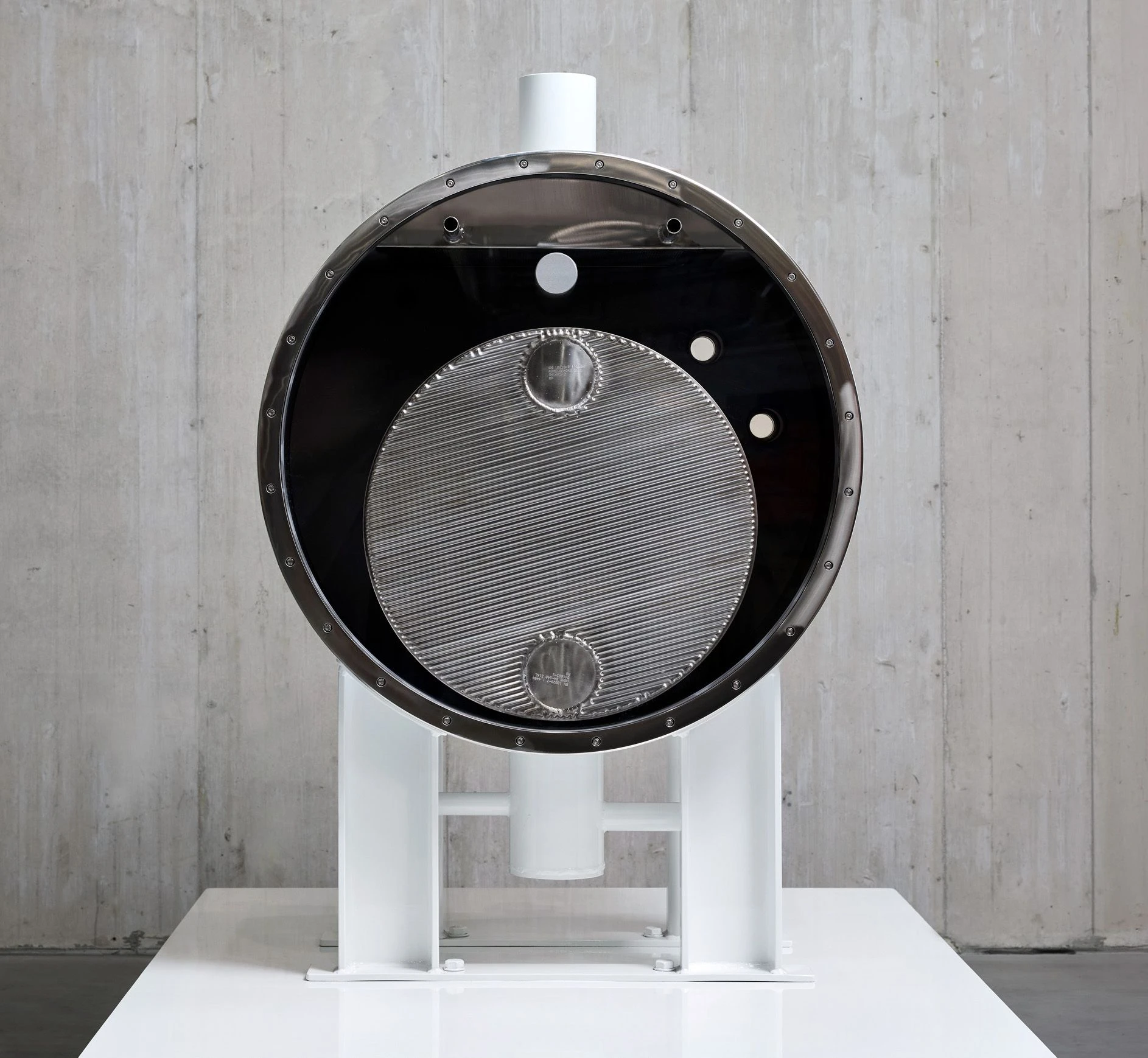
How does the Combined+ work?
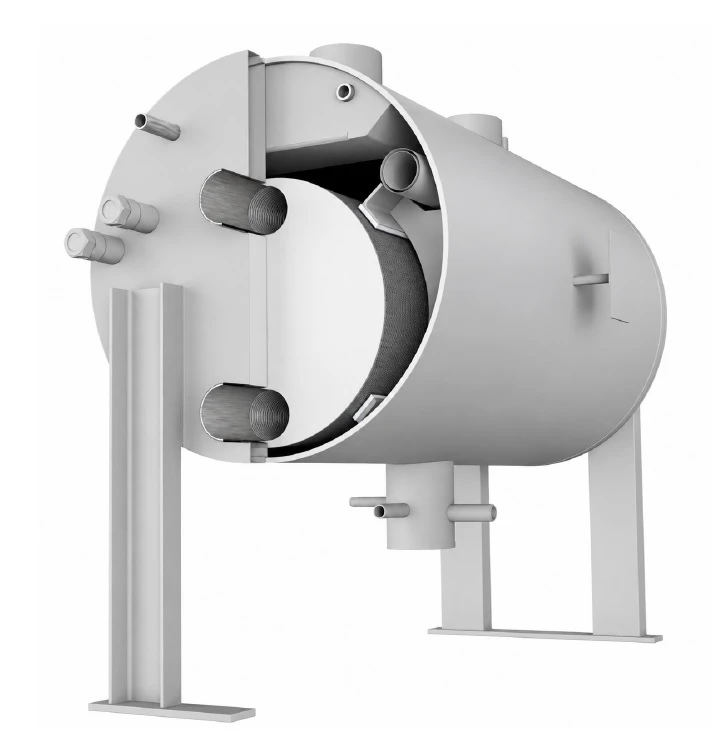
The Combined+ features two separate heat transfer sections within a single shell.
1. Primary evaporation section
In the primary section, heat is transferred to the liquid refrigerant, causing it to evaporate. The refrigerant liquid level is controlled above the primary plate pack. This ensures that the heat transfer surface remains submerged and can be fully utilised for evaporation. This is an important difference compared to a direct expansion evaporator, where part of the heat transfer surface may be required for refrigerant superheating.
2. Integrated droplet separation
After evaporation, the refrigerant passes through an integrated separation system. Here, liquid droplets are separated from the vapour stream. The combination of a flooded evaporator and an integrated separator has been the foundation of Vahterus Combined technology for many years.
3. Integrated superheating section
The dry saturated vapour then flows through a separate heat transfer section. Here, additional heat is supplied to the suction gas, increasing its temperature above the corresponding saturation temperature. The degree of superheat depends on the available heat source, the design and the operating conditions. This additional superheating helps achieve the required suction gas conditions at the compressor inlet.
Where does the heat for superheating come from?
An interesting feature of the Combined+ is its flexibility in selecting the heat source.
The integrated superheater can be supplied with an external heat source, such as a suitable water or process fluid circuit. This allows the superheating function to be designed and controlled separately, depending on the available temperature and capacity.
A particularly interesting option for heat pump applications is the use of warm condensate from the high-pressure side of the refrigerant circuit.
The condensate transfers heat to the suction gas and is further subcooled in the process.
This combines two thermodynamic effects:
- The suction gas is superheated before reaching the compressor.
- The liquid refrigerant is subcooled before further expansion.
This configuration can generally be designed to be COP-neutral. For maximum operating flexibility, we recommend incorporating a condensate bypass control arrangement.
Applications
The Vahterus Combined+ is particularly interesting for:
- Industrial ammonia heat pumps.
- Heat pumps using hydrocarbons, such as propane.
- Industrial CO₂ heat pump systems.
- Refrigeration systems with flooded evaporators and specific suction gas superheating requirements.
- Compact refrigeration and heat pump units where installation space is limited.
- Systems in which heat for superheating can be recovered from the refrigerant circuit itself.
Final suitability depends on the application, design pressures, temperatures, capacity and required superheat.
Technical configurations
The Combined+ concept is available for various Vahterus Combined models.The integrated superheater is available with design pressures of 16, 25, 40 and 60 barg. Higher design pressures are available upon request. The superheater design pressure can be selected independently of the design pressure of the shell and primary plate pack.
Frequently asked questions
What is the difference between the Combined and Combined+?
The existing Combined integrates a flooded evaporator and droplet separator. The Combined+ adds an integrated superheater.
Why is a droplet separator alone not always sufficient?
A droplet separator removes entrained liquid but does not increase the temperature of saturated vapour. In certain applications, additional superheating is required to meet compressor specifications and reduce the risk of condensation in the suction line.
How much superheat can the Combined+ provide?
This depends on the selected model, refrigerant, operating conditions and available heat source. The required superheat is determined during the selection process.
Does superheating always improve efficiency?
No. Superheating is primarily intended to ensure suitable compressor operating conditions. Its effect on COP depends on the refrigerant cycle and the heat source used.
Want to know more about Vahterus Combined+?
Are you designing an industrial heat pump or refrigeration system and looking to combine the advantages of flooded evaporation with reliable suction gas superheating?
Wijbenga will be pleased to help you evaluate the possibilities.
Contact us for a technical consultation or a heat exchanger selection based on your operating conditions.